The classic tank still heats most South Carolina homes — and most of its failures are parts, not obituaries. No hot water, water that will not stay hot, rust, rumbling, a pilot that keeps dying: describe the symptom and get connected with a professional who repairs tank water heaters near you.
Phone only — no forms. How calling this number works

Tank water heater repair in South Carolina covers gas and electric storage tanks, statewide. The tank system’s virtue is diagnosability: elements, thermostats, gas controls, thermocouples, anode rods and valves account for nearly every call — and on a sound tank body, nearly every one of them is worth fixing. Call (844) 791-1083 with the brand, age and symptom, and get matched with a professional who repairs tanks.
Six faults account for most tank repair calls in South Carolina. Yours is probably one of them.
Total loss sounds catastrophic and is usually one part: a tripped breaker, burned element or failed thermostat on electric tanks; a pilot, thermocouple or gas control on gas. The tank itself rarely dies silently.
Electric tanks run two elements — when one burns out, the tank heats at half strength and long showers go tepid. A failing thermostat and heavy sediment produce the same complaint; testing separates them.
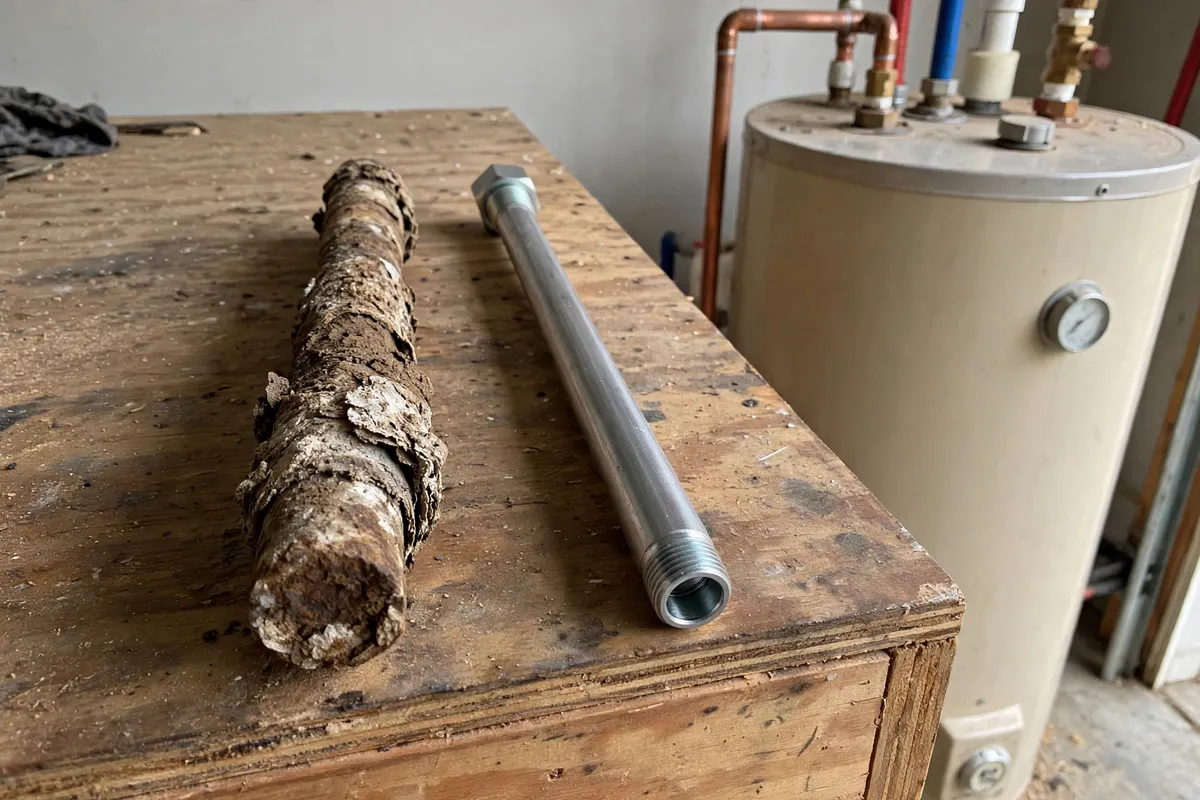
The anode rod exists to rust so the tank does not. When it is consumed, the tank steel takes over — and only the hot side shows it. Caught early, this is a rod and a flush; caught late, it is a replacement.
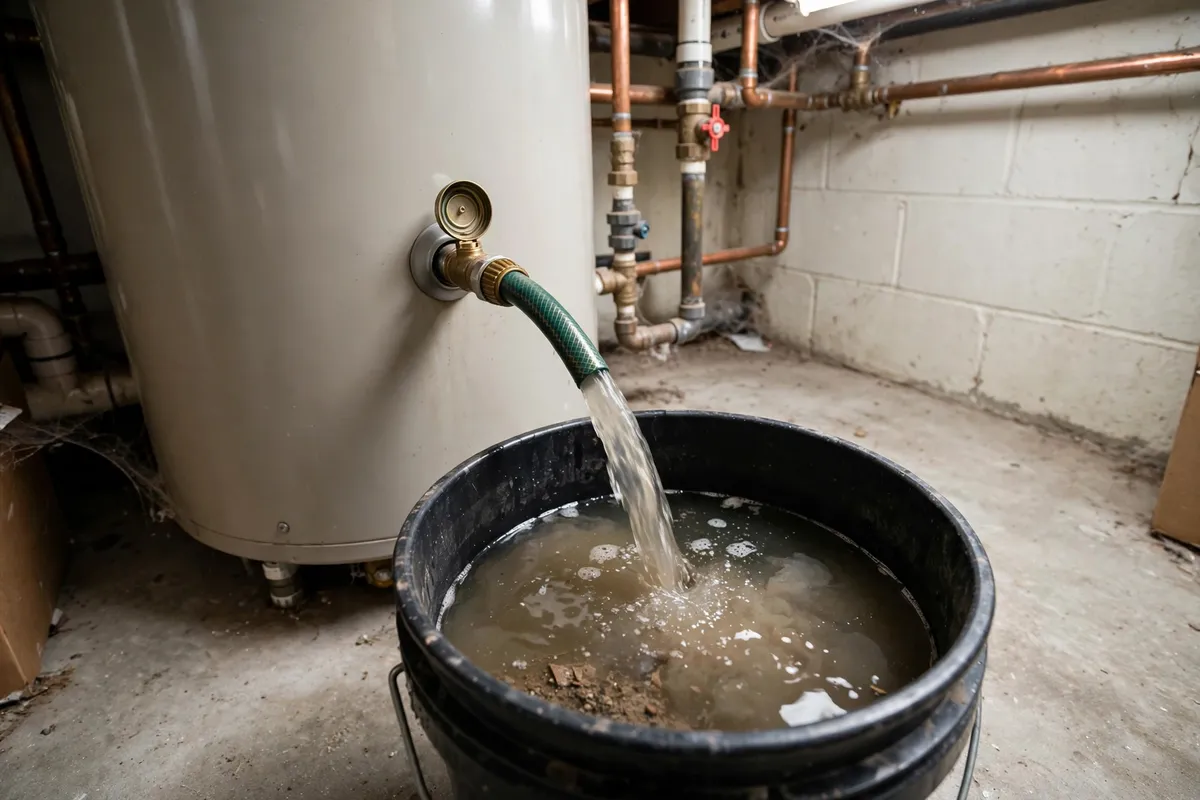
Minerals settle on the tank floor and the burner or elements cook them into a layer that boils and bangs. A flush quiets a young case; years of it overheat the steel and shorten the tank’s life.
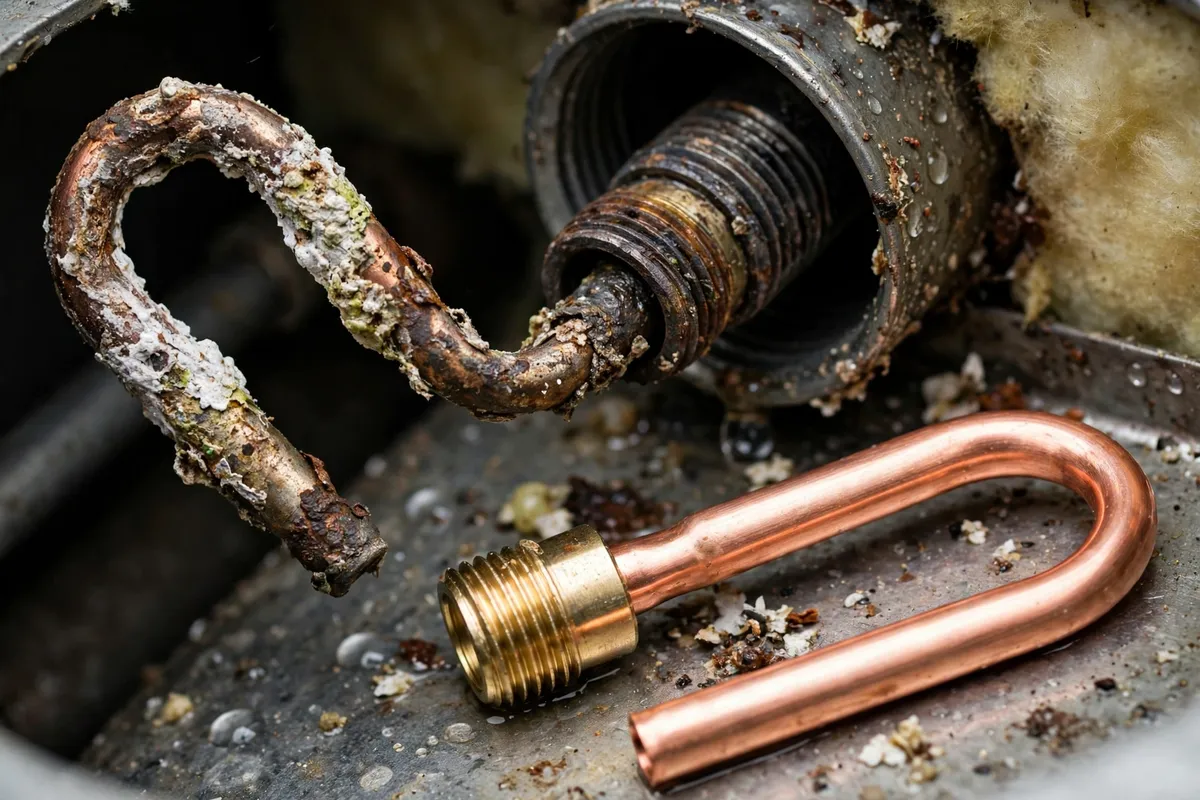
Leaks from valves, fittings, the drain or the T&P are parts. A leak from the tank body or base seam is the vessel itself — and that distinction is the whole diagnosis, because one is a repair and the other is not.
A pilot that will not stay lit is usually a thermocouple, a dirty pilot assembly or a gas control valve aging out. If you are relighting it weekly, that is a diagnosis asking to happen, not a ritual to keep.
A good tank diagnosis works cheap-to-expensive and outside-to-inside:
Breaker, pilot and gas supply confirmed before a single part is suspected.
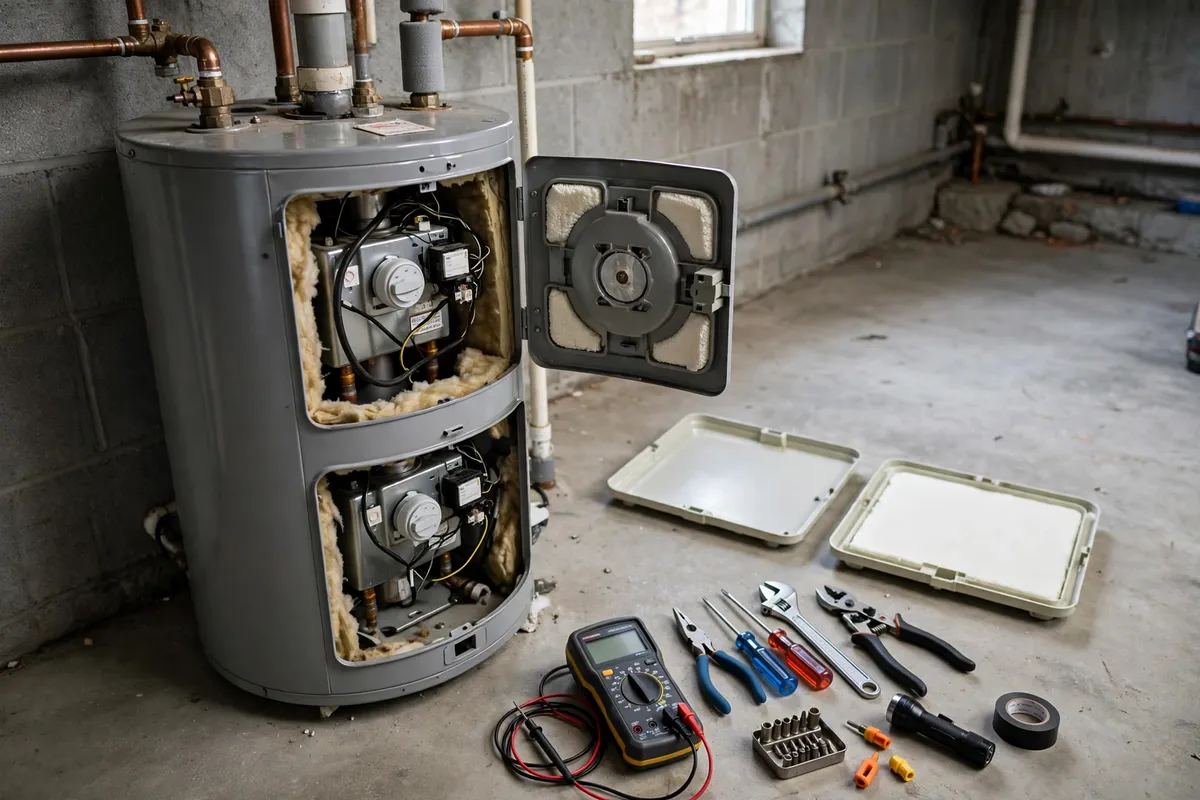
On electric tanks, both elements and both thermostats are tested — not guessed from the symptom.
Color, smell and a drain sample tell you about sediment, anode state and whether rust is in the water or in the tank.
Base, seams and fittings inspected last and most carefully — because this answer decides repair versus replacement.
Write down the brand, capacity and age from the tank’s label before you call — (844) 791-1083 — it decides which parts the professional brings.


Everything a tank suffers from starts at the floor. Minerals precipitate out of heated water and settle; the burner or lower element then cooks that layer a little harder with every cycle. The layer insulates the water from the heat (longer runs, lukewarm complaints), traps heat against the steel (rumbling, shortened tank life) and feeds the corrosion that eventually takes the vessel. A yearly drain-and-flush keeps the layer thin enough to stay harmless.
The same visit carries the tank’s other life-decider: the anode rod. Checked and replaced on schedule, it is the difference between a tank that lasts eight years and one that lasts fifteen. Add a T&P valve test and a look at the drain valve, and the yearly visit is the whole maintenance story of a tank — small, scheduled, and very much cheaper than the alternative.
No hot water, lukewarm, noise, rust or a leak — plus brand, age and gas-or-electric from the label.
Power and fuel, elements and thermostats or the gas control, a water sample, and the vessel inspection.
You hear which part failed and why, before anything is agreed.
The part is fitted, the tank brought back to temperature, and delivery checked at a tap — hot, steady, quiet.

Repair wins while the vessel is sound — even at ten or twelve years, an element, thermostat or valve repair on a dry tank is usually money well spent. Replacement takes over when the tank body leaks or rusts through, or when repairs start stacking within a single year. Ask the professional to show you the base and seams: in tank work, the answer is almost always visible.
Tank repairs run statewide through local professionals — the same network behind this site’s city hub pages, from the Upstate to the Lowcountry. City pages carry the local detail; one call covers everywhere else.
Brand, age, gas or electric, and what the water is doing. We will connect you with a professional who repairs tank water heaters in your part of South Carolina.
Call (844) 791-1083