Charleston’s newer island homes run tankless from day one, and its historic homes convert to win back closet space. When yours throws a code or goes cold, get a tankless-specific diagnosis from a professional who covers Charleston.
Phone only — no forms. How calling this number works

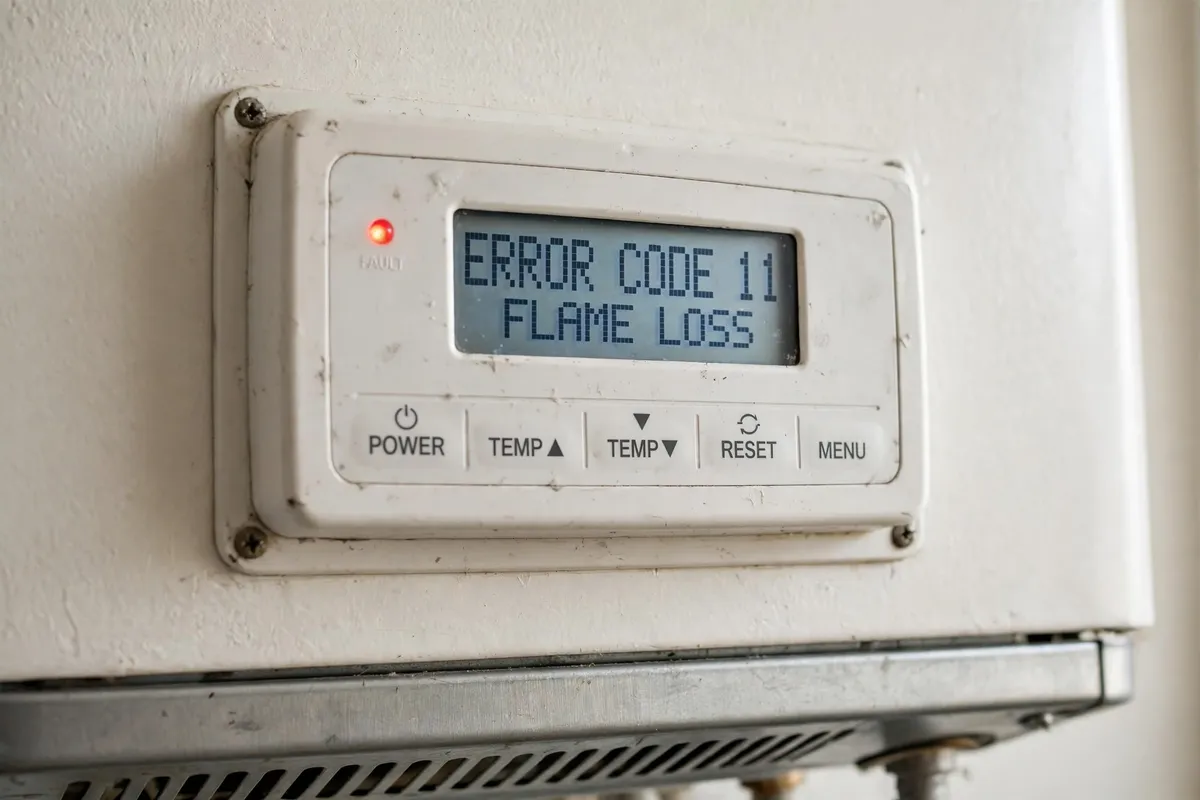
Tankless water heater repair in Charleston, SC — error codes, ignition failures, temperature swings and scale shutdowns, diagnosed on Rinnai, Navien, Noritz, Rheem and other units across Charleston’s 19-ZIP hub. The local supply scales exchangers steadily, and salt air works on vents and fittings from the outside. Call (844) 791-1083 with your error code ready.
Fast-growing island communities installed a generation of tankless units at roughly the same time — and they reach descaling and sensor age together. Codes that appear only at high demand, or only in the busiest homes, are the local pattern.
Tankless vents and exterior fittings live in harbor air here. Corroded vent joints and weather-worn igniters cause intermittent shutdowns that come and go with wind and rain — a fault pattern inland cities rarely see.
Second homes and part-time residences leave tankless units idle for weeks, then demand a full house of showers on arrival weekend. Scale sets and filters clog unnoticed during the idle weeks; the failure shows up at maximum load.
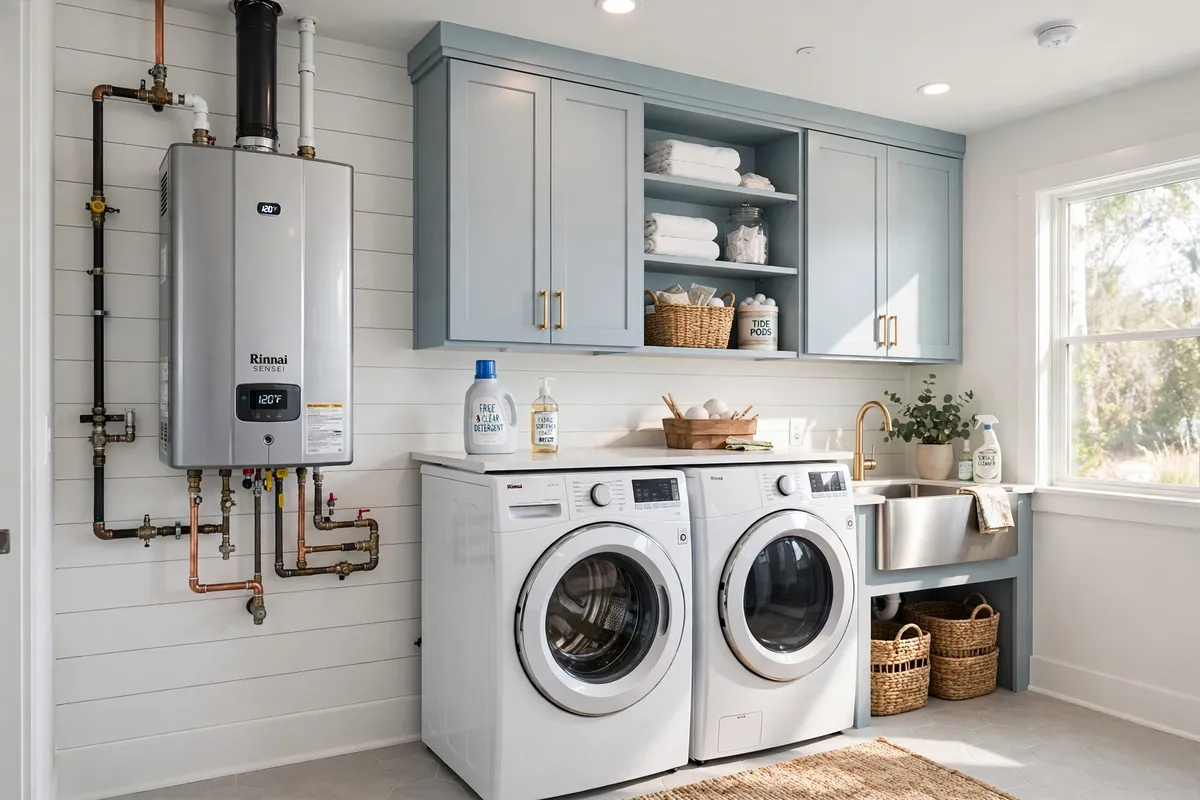
Charleston is two tankless markets sharing one skyline. On Daniel Island and Johns Island, tankless is the original equipment in large new homes — high demand, long pipe runs, recirculation systems, and owners who notice a two-degree swing. On the peninsula, tankless usually arrives as a conversion: a historic home trades a bulky tank for a wall unit and wins back a closet, sometimes on older gas lines that deserve an honest capacity check. Both groups live with the same two local facts — mineral water that scales exchangers on a schedule, and salt air that ages everything metal. Maintained, a Charleston tankless unit has a long life; skipped, it codes out on the busiest weekend of the year.


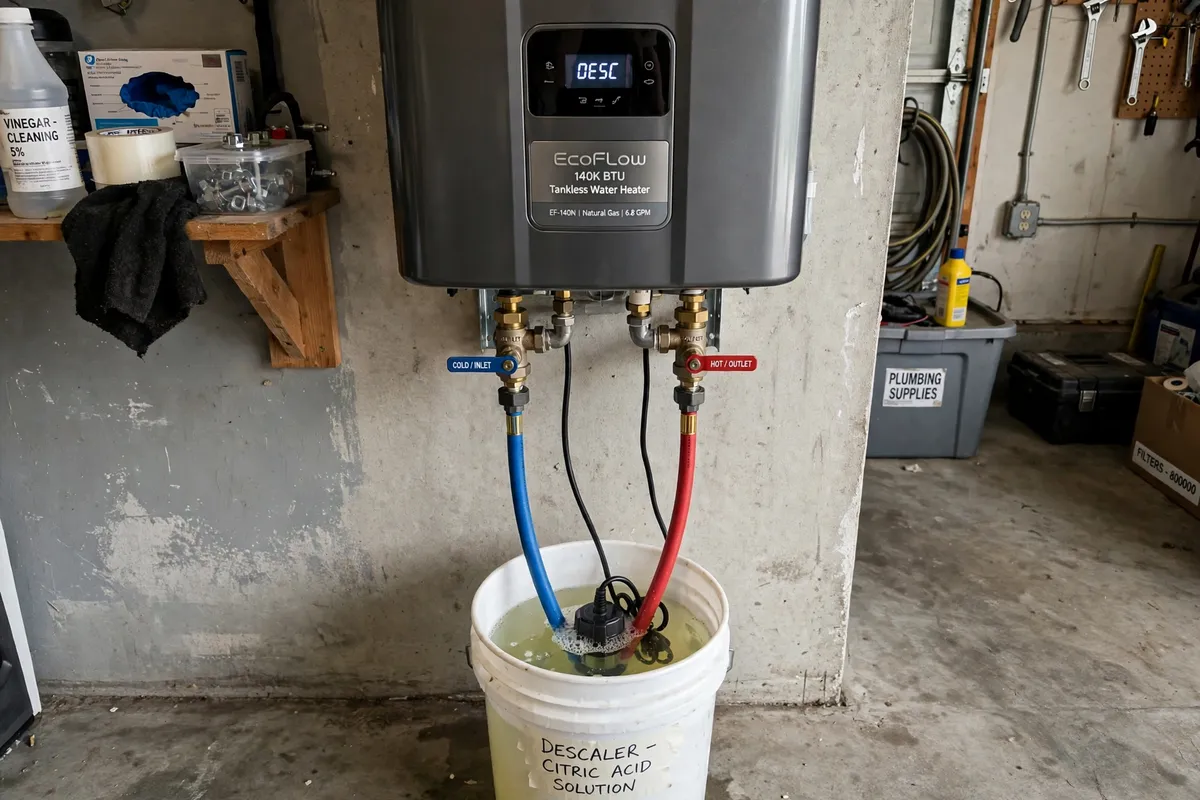
Here the manufacturer’s roughly yearly descale is not a suggestion to stretch — Charleston’s supply scales exchangers steadily, and the inlet filter should be cleaned at the same visit. If your unit codes for overheating soon after a proper flush, the cause is more likely a sensor or flow fault than fresh scale, and that is a diagnosis, not a second flush.
Brand, model, and the error code or symptom pattern — that starts the match.
Your call goes to a professional who services tankless units in the Charleston hub.
The fault is named and shown to you before any repair is agreed.
Charleston’s repair-versus-replace call turns on corrosion and water history. Sensors, igniters, fans and scaled exchangers are all serviceable, and repair wins while the cabinet and venting are sound. Replacement earns its place when salt air has eaten the venting or cabinet, when the unit has been through flood water, or when a discontinued model strands you for parts. Ask the professional to show you which of those you are looking at — in Charleston, the outside of the unit tells the story as often as the inside.
Repairs are matched by ZIP across the whole Charleston hub — including these areas. For broad tank and tankless repair beyond tankless, the Charleston hub page is the parent of this page; statewide tankless help lives on the South Carolina tankless page.
Tell us the brand, the model and what the display says, and get connected with a tankless professional covering the Charleston area.
Call (844) 791-1083