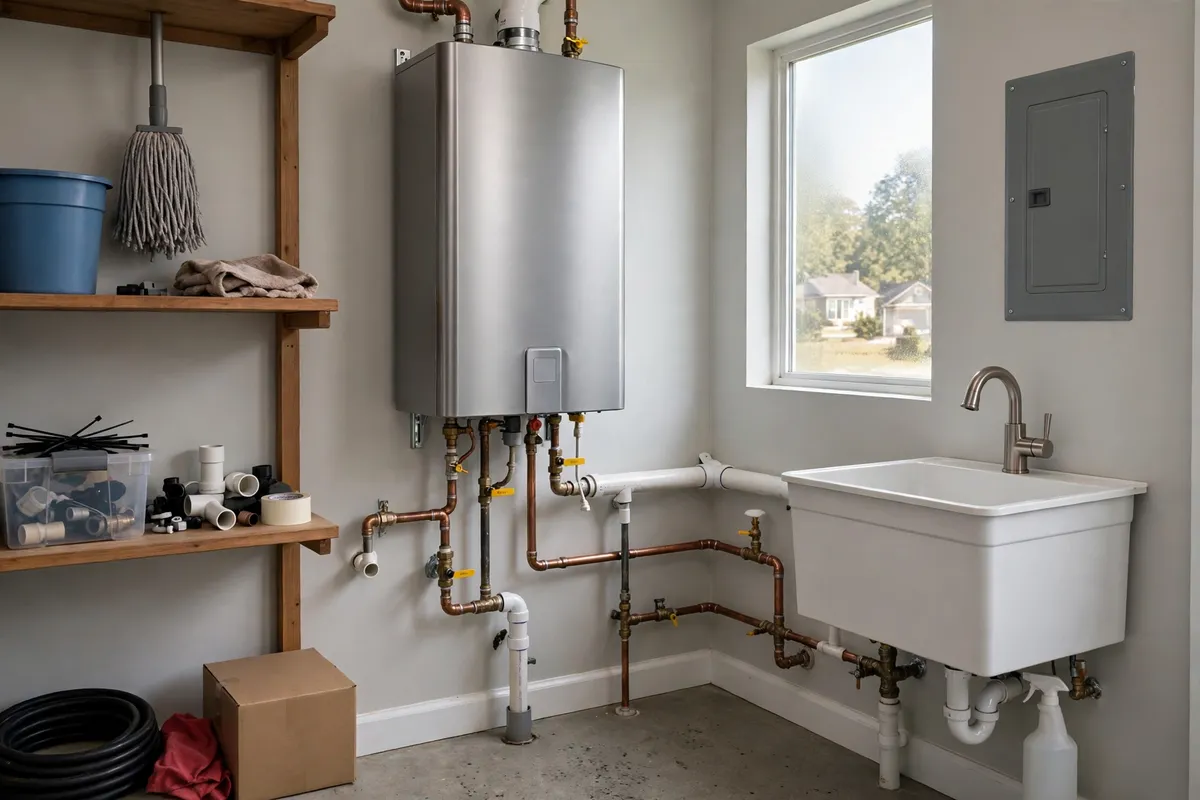
Tankless arrived in York County with the growth — standard in new Fort Mill and Indian Land construction, retrofitted into Rock Hill’s older homes, and running the lake houses in between. When yours throws a code, get a tankless-specific diagnosis from a professional who covers the 297 area.
Phone only — no forms. How calling this number works

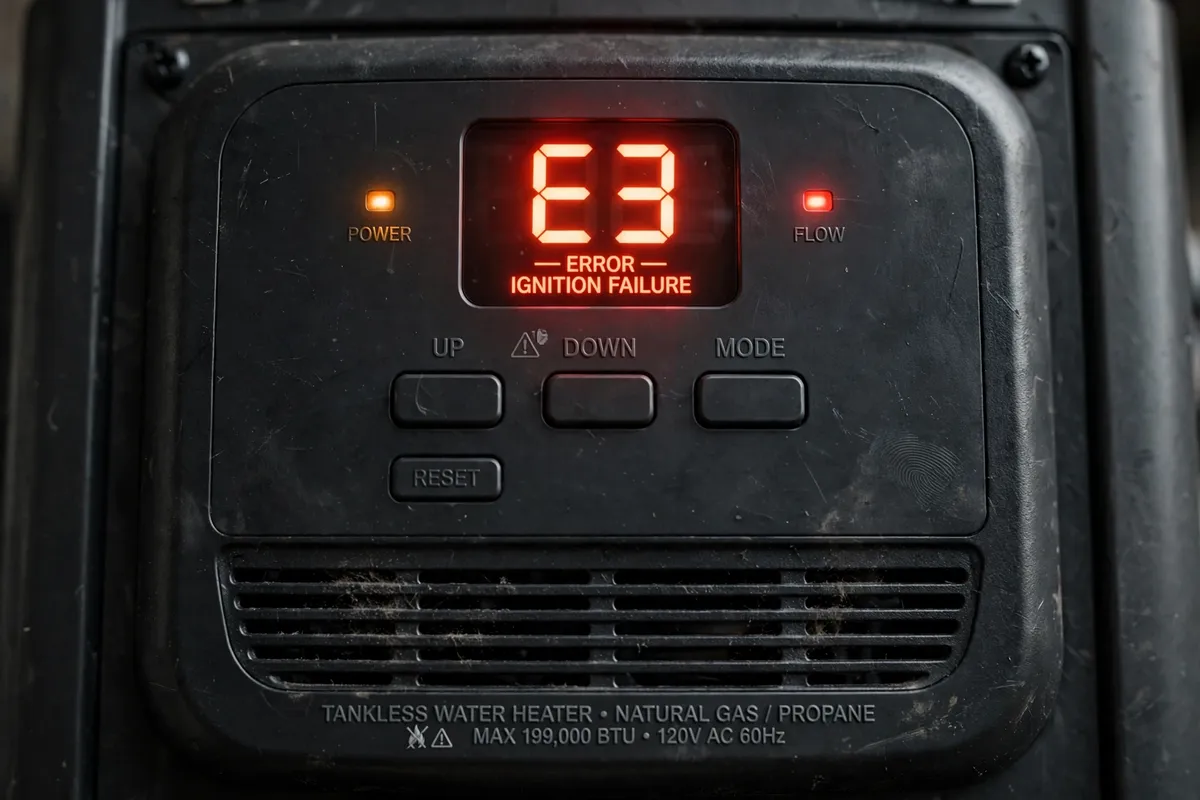
Tankless water heater repair in Rock Hill, SC — error codes, ignition failures, scale shutdowns and flow problems, diagnosed on Rinnai, Navien, Noritz, Rheem and other units across the 27-ZIP York County hub. The local base is young and growing — most units here are builder installs reaching their first serious service years together. Call (844) 791-1083 with your error code ready.
The growth towns’ tankless units were installed by the street, not by the household — so first-generation faults arrive by the street too: first descaling debts, first sensors, first igniters, all in the same few seasons. A neighborhood’s experience is genuinely predictive here.
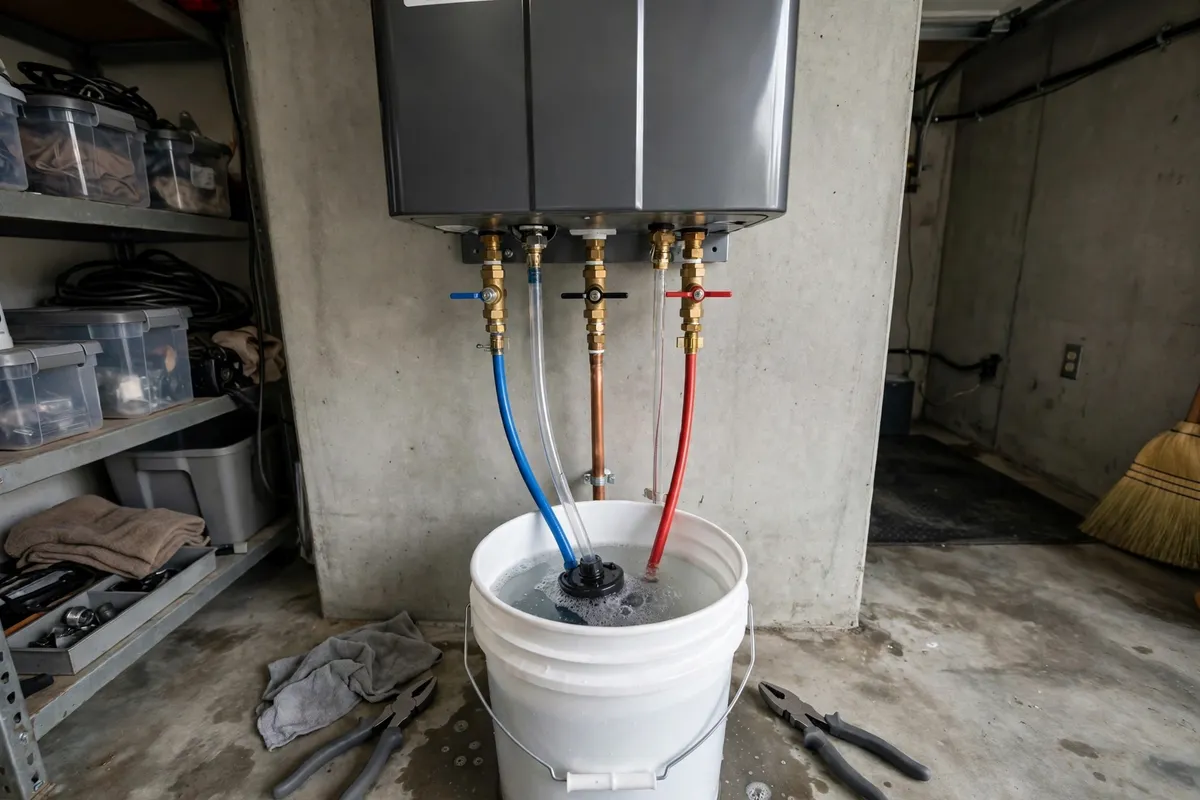
Young suburbs produce a signature call: a unit installed five to eight years ago, never serviced because nothing was wrong, now shutting down under load as scale closes in. Almost always recoverable — and the start of the yearly rhythm, delivered late.
Out where the hub runs rural, tankless units drink well water with the county’s iron and minerals undiluted — filters load faster, exchangers foul sooner, and the maintenance interval honestly shortens.
York County’s tankless story is the growth story. In Fort Mill, Indian Land and Tega Cay’s subdivisions, tankless was simply how the houses were built — chosen by builders for buyers who expected it — which gives this hub the youngest tankless base on the whole site, now arriving at its first real service years. In Rock Hill’s older neighborhoods, tankless is a deliberate retrofit: a wall unit winning space back in homes built for tanks. Around Lake Wylie it splits the difference, in lake homes that swing between empty and full. What unites them is the calendar: this county’s units will succeed or fail as a maintenance proposition, because the hardest water here is moderate, the units are sound, and nearly every common fault — scale, filters, sensors — is a service item. Owners who start the yearly rhythm at the first code rarely make a second urgent call.


Town-water homes — Rock Hill, Fort Mill, most subdivisions — keep the manufacturer’s roughly yearly descale and filter clean, and that genuinely suffices. Well-water homes toward Clover, Chester and the lake roads run the same visit on a stricter conscience: filters load with iron and sediment faster, and skipping a year costs more. If you are not sure which water your home has, the call is a good place to sort it out — it decides your interval.
Brand, model, and the error code or symptom pattern — that starts the match.
Your call goes to a professional who services tankless units in the Rock Hill hub.
The fault is named and shown to you before any repair is agreed.
This hub’s young tankless base tilts strongly toward repair: the common faults — scale shutdowns, loaded filters, first sensors and igniters — are service items on units with most of their service life ahead. Replacement enters when a discontinued builder model strands you for parts, when an exchanger was run scaled for years and is damaged rather than dirty, or when the home’s demand has genuinely outgrown the unit — growing families in growing towns do outgrow builder sizing. Ask which of those three it is, and the answer should be specific.
Repairs are matched by ZIP across the whole Rock Hill hub — including these areas. For broad tank and tankless repair beyond tankless, the Rock Hill hub page is the parent of this page; statewide tankless help lives on the South Carolina tankless page.
Tell us the brand, the model and what the display says, and get connected with a tankless professional covering the Rock Hill area.
Call (844) 791-1083