How do I know my Charleston water heater needs replacing rather than repairing?+
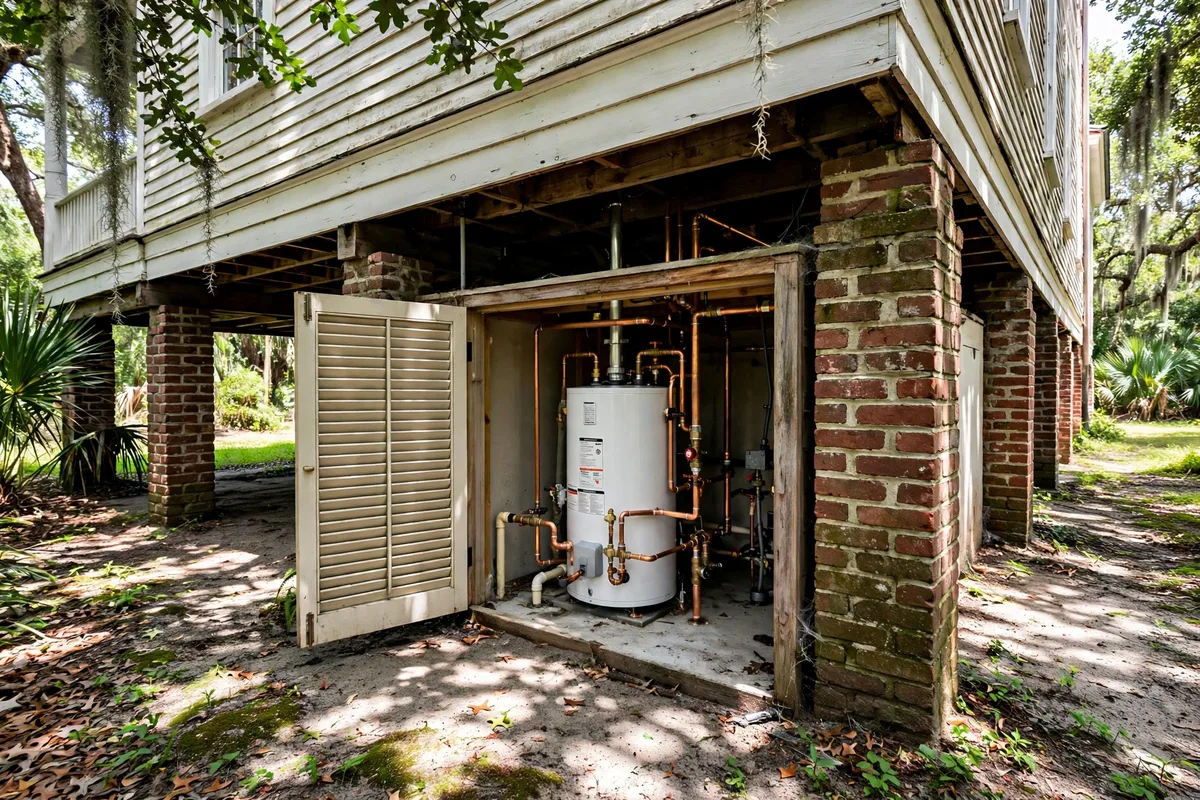
Three signs usually decide it: the tank body is leaking or rust-streaked, corrosion has reached the vent or fittings, or the unit is at the upper end of its coastal lifespan — often 8–12 years here. A single failed part on a sound, younger tank is a repair; a failing vessel is a replacement.
Why do water heaters seem to die younger in Charleston?+
Salt air and enclosure humidity. Units under raised homes breathe damp, salty air year-round, which corrodes jackets, vents and fittings faster than inland conditions. It does not make the water worse — it makes the hardware’s environment harsher, and replacement timelines honest ones.
Can I switch from a tank to a tankless unit in Charleston?+
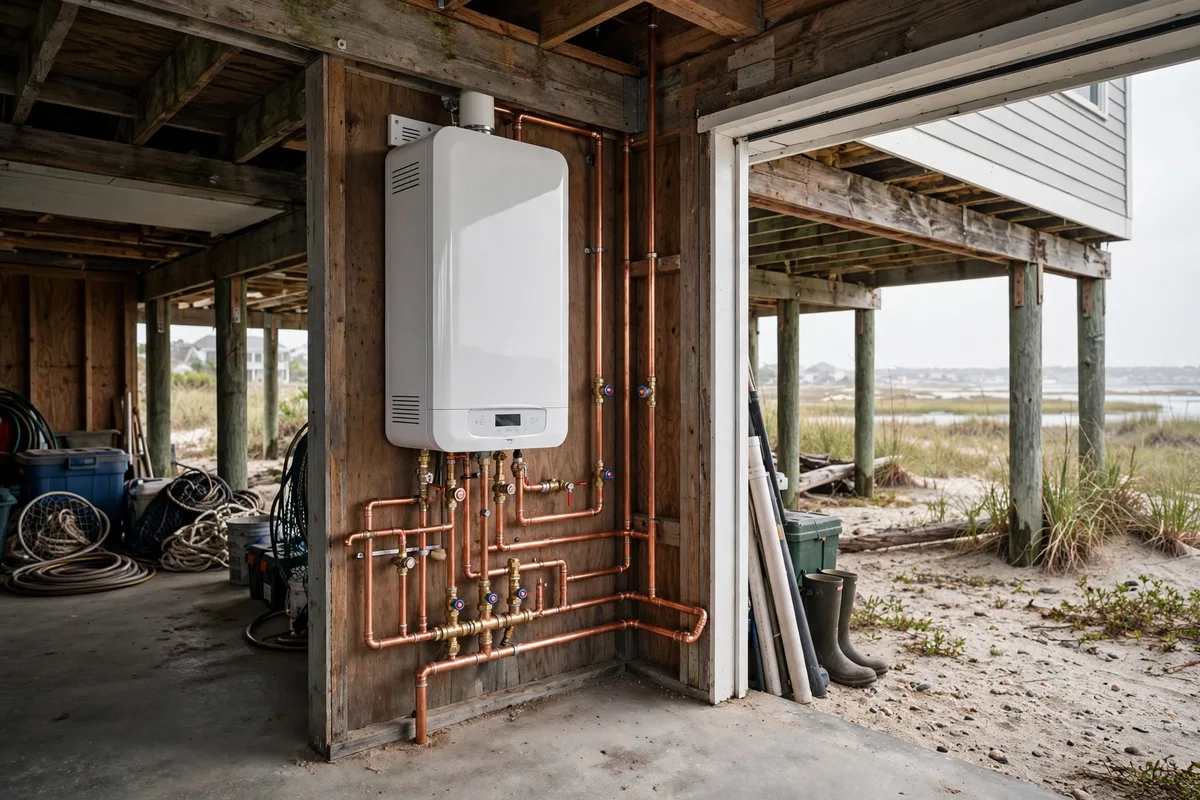
Usually, yes — and tankless has a coastal advantage: no big steel vessel sitting in the damp. The conversion adds venting, a condensate line and sometimes a gas-line check, and the unit needs a wall inside the enclosure or a ground-level room. In historic-district homes, the assessment starts with the enclosure and what it can hold.
Do I need a permit to replace a water heater in Charleston?+
In practice, yes — water heater replacements are permitted work in Charleston County, and work in the historic district can carry added review considerations for exterior-visible changes. The installing professional normally handles the permit as part of the job; confirm that on the call so it is in the written scope.
How much does water heater replacement cost in Charleston?+
It depends on the unit type and size, the fuel, and what the swap uncovers — corroded venting, an expansion tank, a pan or fitting updates move the number more than the heater itself. This site does not quote prices; when you call, ask the professional for an estimate once they have assessed your current setup, and get the agreed scope in writing before work starts.
Will the old water heater be taken away?+
Haul-away of the old unit is a normal part of a replacement job — draining it, disconnecting it and removing it from the home. Confirm it is included in the written scope so there are no surprises on install day.